
At Timinkar, a school built by the families of the plateau
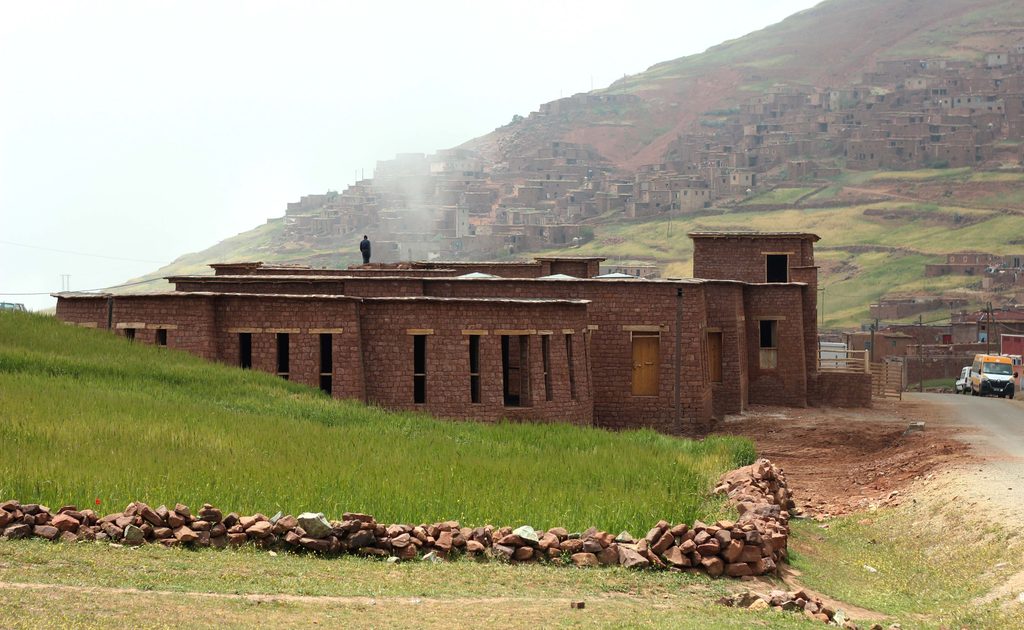
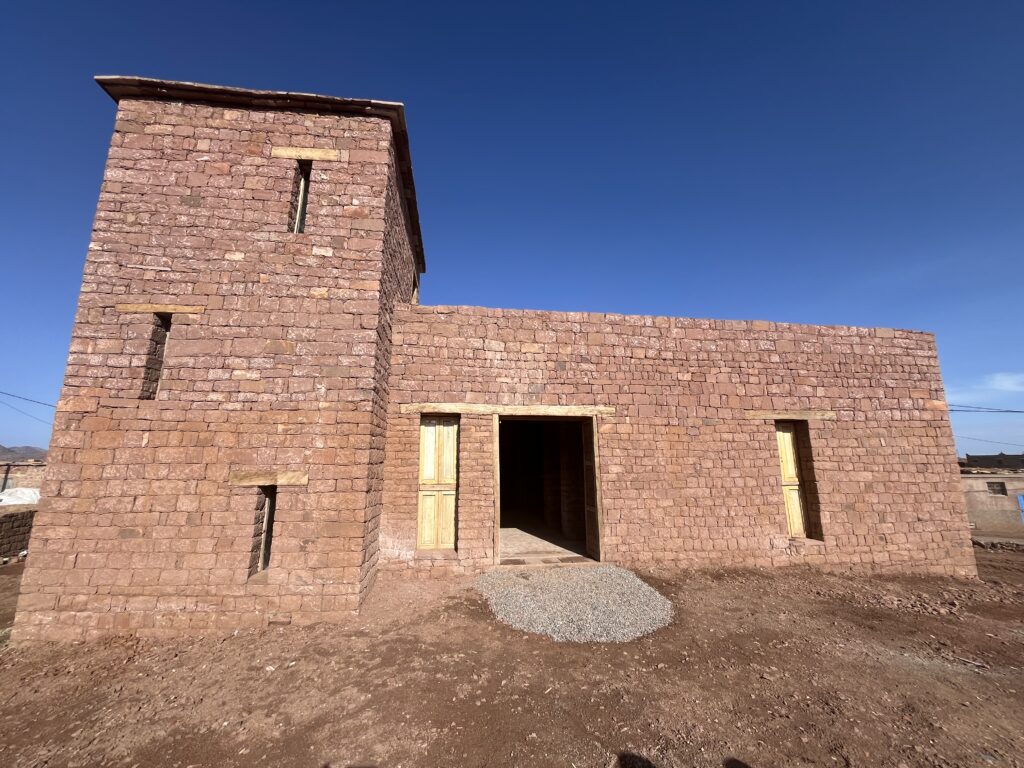
In September 2023, an earthquake of rare violence struck the Moroccan High Atlas. Three years later, on the Timinkar plateau, 984 sqm middle school welcomes students from 13 villages. It was built with local stone, with the families, based on the plans of architect Salima Naji. The Mécénat Servier Charity Fund committed to this project alongside l’Heure Joyeuse and Open Village.
The earthquake of September 8, 2023, left tens of thousands of families homeless and destroyed many villages and schools in the Al Haouz province. Nearly 2 million people, including 674,892 children, lived in the most affected areas at the time (1).
In the Timinkar plateau, 70 km from Marrakech, a new educational complex emerged through reconstruction.
Another idea of modernity
The 984 sqm building was designed by Salima Naji, who volunteered her services. Her principle is encapsulated in one sentence: a safe, comfortable, and climate-adapted place. The families of the plateau participated in the construction. The stone is local, the ancestral techniques are those of the High Atlas, and the structure is both seismic-resistant and adapted to climate change.
The project was designed from the outset to be reproducible: other territories exposed to the same constraints can adopt its constructive principle. A one-level building of 163 sqm houses the teaching staff on-site — a practical condition for the continuity of the school year.
What makes the Timinkar community project so special is that it promotes a different idea of modernity. It preserves the best of our heritage while introducing just the right amount of innovation. Our work is guided by genuine sustainability and consideration for the everyday comfort of the children, plus the desire to instill a sense of pride in their community.
Salima Naji, Architect
13 villages, 278 students
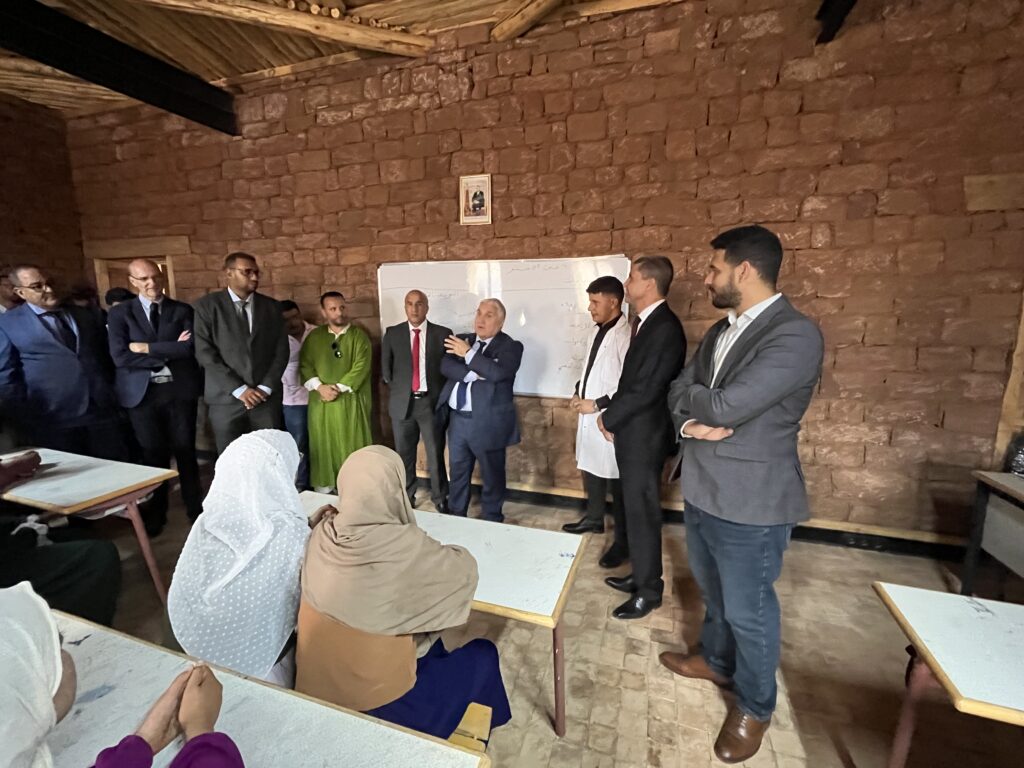
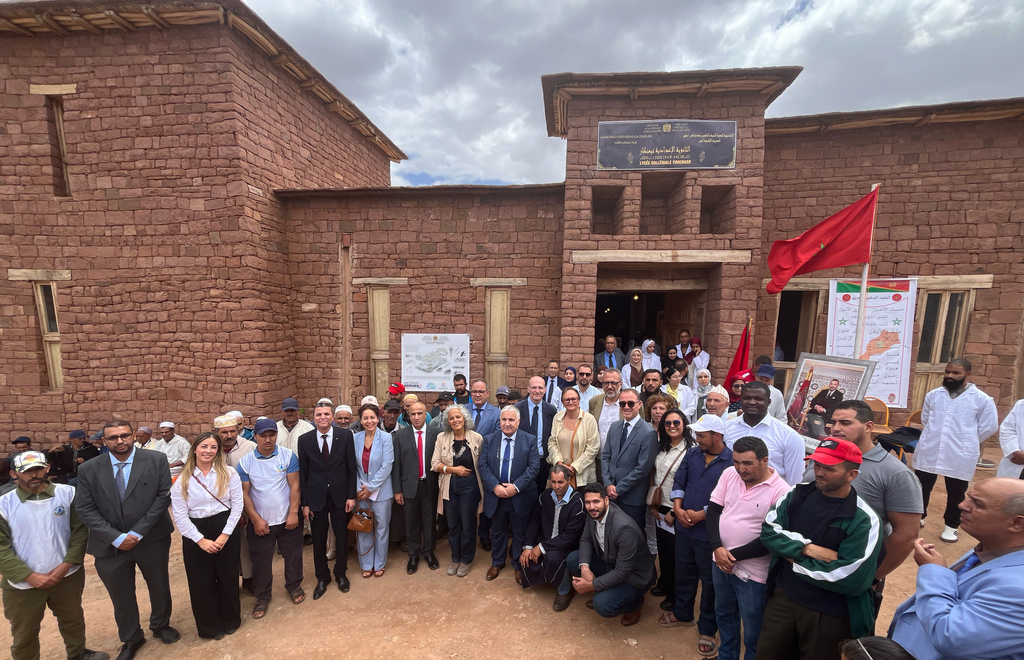
The Timinkar middle school serves 13 villages on the plateau. In 2025-2026, 278 students, 54% of whom are girls, completed their school year there. On September 7, 2026, the project partners gathered for the opening of the 2026-2027 school year, in the presence of the Secretary General of Morocco’s Ministry of National Education, Preschool and Sports.
An ecosystem that transcends borders
From the Al Haouz province to Suresnes, via Casablanca and Paris, the project brought together the Tizi N’Oucheg Development Association (ATND), l’Heure Joyeuse, Open Village, the families of the plateau, and the Moroccan Ministry of National Education, Preschool and Sports.
This project demonstrates how mutual aid, at the scale of a village, a nation, and across borders, is a source of creativity, innovation, and shared pride.
Patrick Therasse, General Delegate of the Mécénat Servier Charity Fund
A model meant to be replicated
In the aftermath of the earthquake, the Kingdom of Morocco set a course: to rebuild sustainably, with buildings capable of withstanding a new disaster. In Timinkar, vernacular architecture provided the answer.
The constructive principle is documented and transferable. The future may lie there: not in a building, but in what it makes reproducible elsewhere.
(1) UNICEF, Morocco Earthquake, 2023